
Gutter Repairs
Leaking joints, sagging runs, rusted sections, loose brackets and overflowing gutters repaired — and honest advice on when a repair isn't worth it.
Learn More →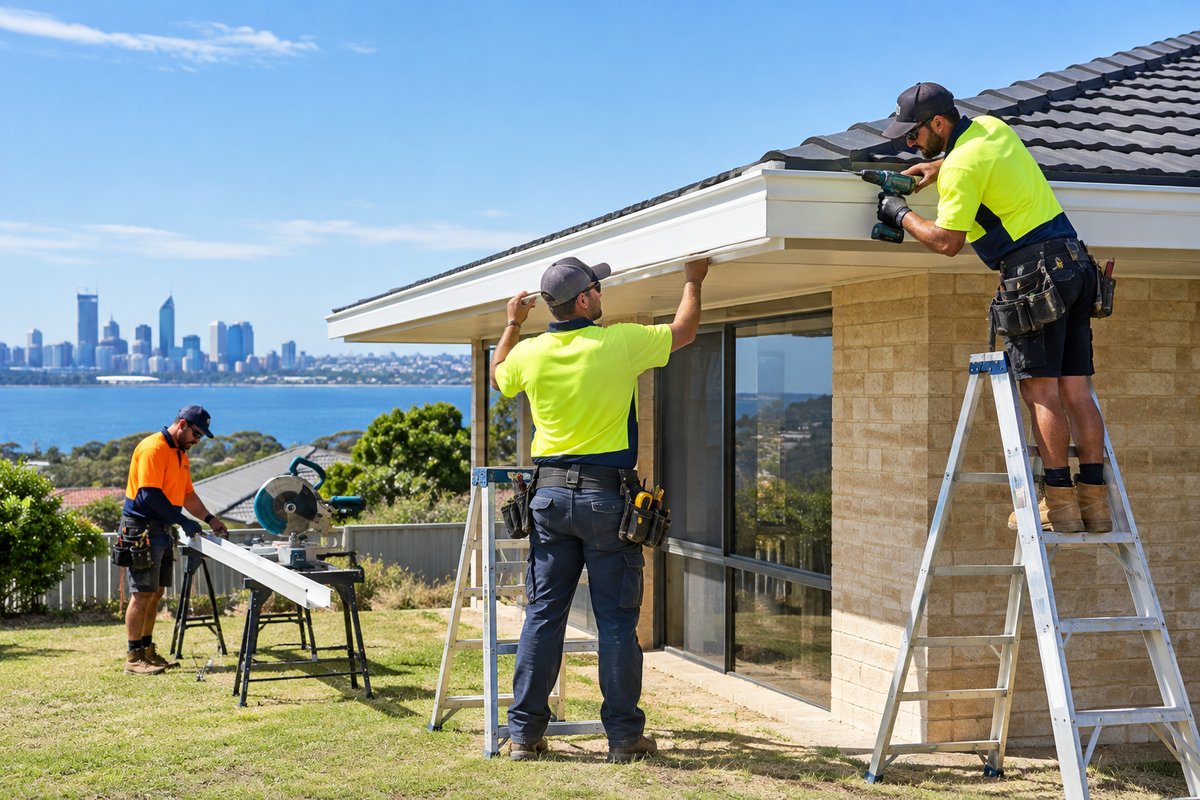
Rotten timber fascias and tired barge boards replaced or capped in steel, ready for new gutters and a cleaner roofline.
Request a Free Quote
The fascia is the board along the roof edge that your gutters hang from. Barge capping covers the exposed edge of the roof on a gable end, where the sheeting or tiles stop at the side of the house. When either one fails, the gutter loses its support and the roof edge loses its weather seal. We replace rotted or warped timber fascia, fit Colorbond or aluminium fascia covers where the board underneath is still sound, and install barge capping with proper flashing and fixings.
Perth is tough on roof edges. Summer heat and UV dry out timber and crack the paint, so by the time winter arrives, rain can get into the end grain and the board starts to split. Wind-driven rain then pushes water behind the gutter and into the rafter ends. Soft, damp timber also gives termites an easier way in. You might notice paint peeling under the gutter, a gutter sagging at one end, or a gap at the gable where birds or possums are getting into the roof space.
Before we fit anything new, we check the rafter ends behind the fascia and cut out anything that has gone soft. New boards or covers are lined up so the gutter falls correctly to the downpipes. If your gutters are also rusted through, we can supply Colorbond gutters in the same job. For smaller leaks and loose brackets, our gutter repairs may be all you need once the fascia is sorted.
From the first roof edge inspection to the final gutter water test.
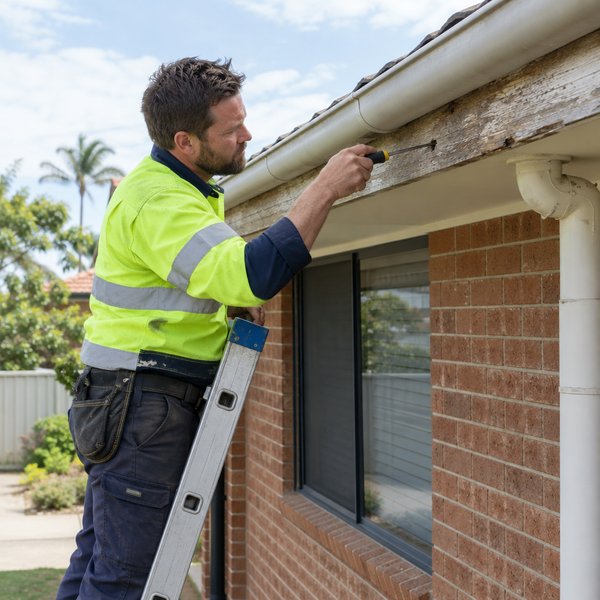
We look along the full fascia and barge line from a ladder and from the roof where safe. We probe the boards for soft spots and check rafter ends, gaps and old fixings. This tells us if the boards can be covered or need to come out.
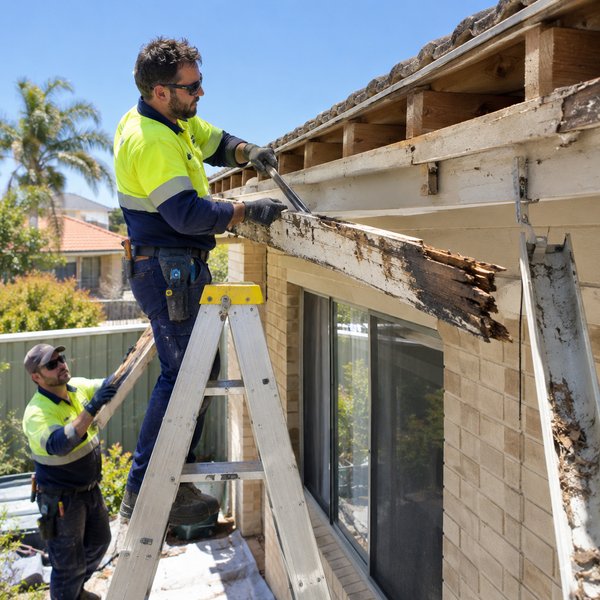
We detach the gutters and set them aside, then pull off the failed fascia or barge capping. Any damaged rafter ends are cut back to sound timber. The exposed roof edge is checked for termite damage and moisture before we close it up.
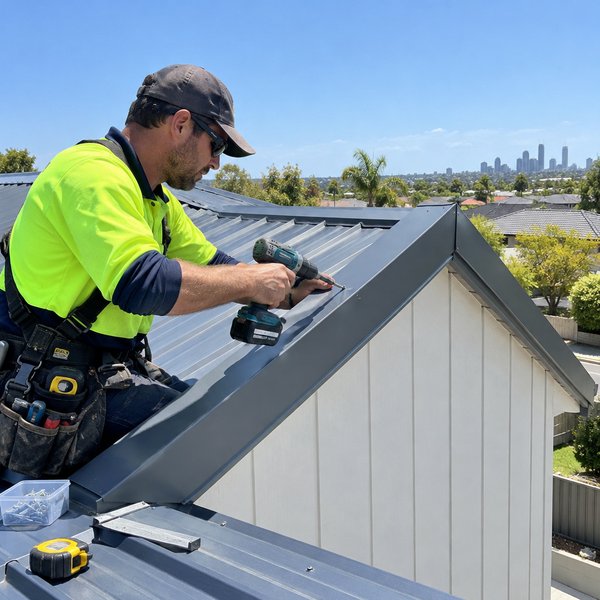
New boards or Colorbond and aluminium covers are cut to length, lined up and screw-fixed into the rafter ends. Barge capping is fitted over the roof edge with flashing and sealant so water runs off and not under. Joins are kept tight and neat.
The gutters go back on, or new ones are fitted, at the correct fall towards the downpipes. We run water through to check flow and look for leaks at the joins. Offcuts and old timber are cleared from your property.
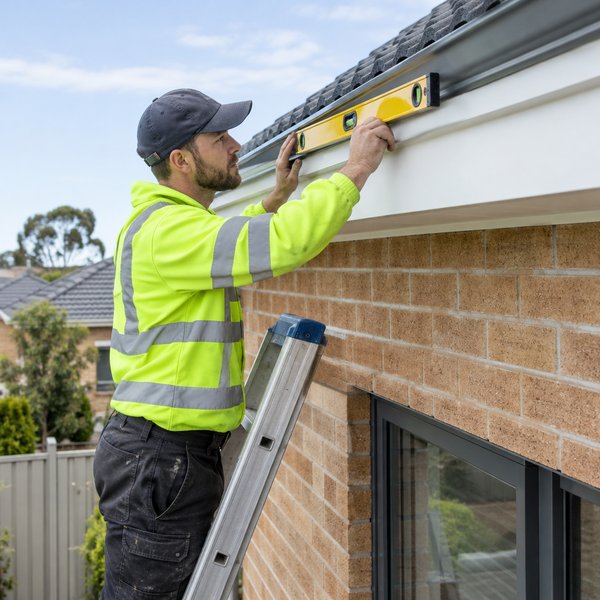
Better gutter support, a sealed roof edge and less repainting under the Perth sun.
Gutters need a straight, firm fascia to hold their fall. With a sound board behind them, they stop sagging and pooling water. That means fewer overflows down your walls in a heavy winter downpour.
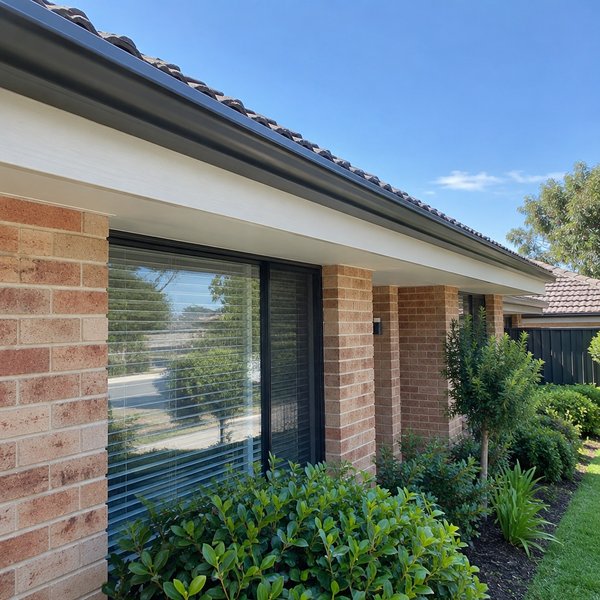
Replacing soft timber and sealing the roof edge removes the damp, decaying wood that termites favour. Closed-up gable gaps also keep possums, birds and wasps out of your roof space. It is cheaper to fix the edge than to repair what gets in behind it.
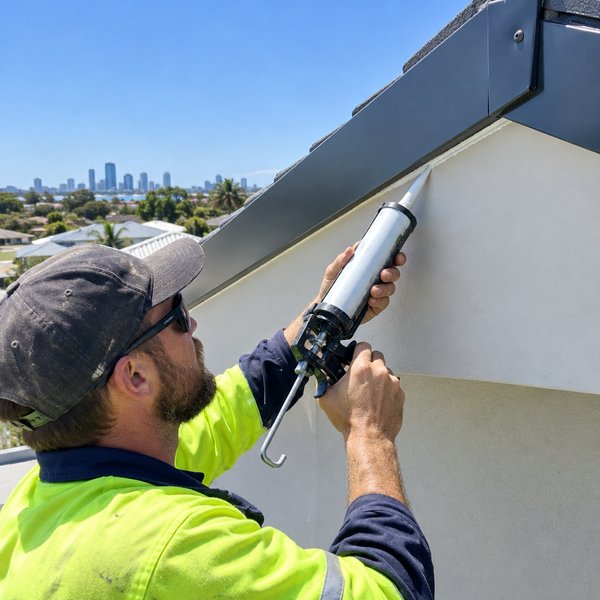
Colorbond and aluminium covers do not need repainting every few summers like exposed timber does. They stand up to UV and heat without cracking or peeling. You get a clean, straight roof line that suits your existing roof colour.
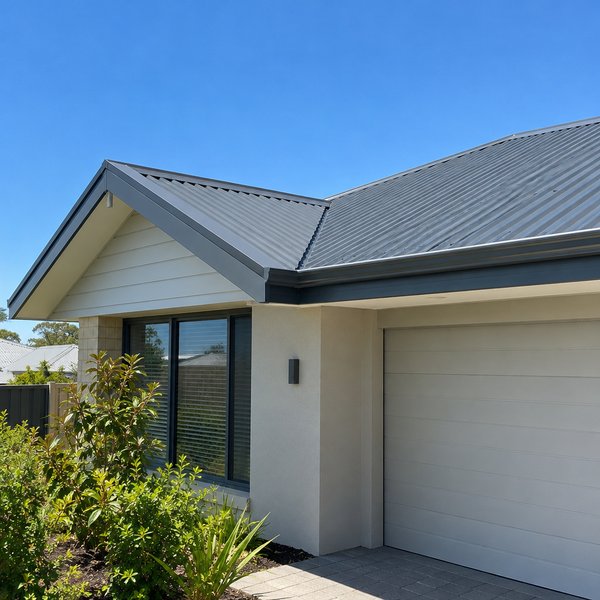
We see the same patterns across Perth homes: sun-cracked paint, rotted board ends and loose barge capping on older brick-and-tile houses. That experience helps us spot problems quickly and recommend the right fix.
Fascia, barge capping and gutters all meet at the roof edge. Handling them together means one crew, one set of measurements and no finger-pointing if something leaks.
A fascia that is out of line gives you a gutter that holds water. We set boards and covers against a string line, then check the fall to the downpipes before we leave.
Covering sound timber with Colorbond or aluminium is often a sensible fix. If the board is rotten, we say so and explain why a cover will not last. You get a clear answer before any work starts.
Common questions answered
If the timber is straight, firm and free of rot, a Colorbond or aluminium cover can go over it. If it is soft, split or has termite damage, it needs to come out first. We check this on site before recommending either option.
Barge capping covers the edge of the roof on a gable end, where the sheeting or tiles finish at the side of the house. It stops wind-driven rain getting under the roof and protects the timber behind it. If it is loose, rusted or missing, water and pests can get in.
Yes. The gutters are fixed to the fascia, so they need to be removed to replace the board. If they are still in good shape, we refit them at the correct fall. If they are rusted or sagging, it is often sensible to replace them while the edge is open.
The main factors are the length of roof edge, the material you choose, and how much timber has rotted. Access matters too, as double-storey homes and steep or tiled roofs take more setup. Request a quote and we will price it after looking at the roof edge.
Dry weather is easier for sealing, fixing and painting, so late spring through autumn suits most jobs. It is a good idea to fix the problem before winter, when heavy rain finds every weak spot in the roof edge. If water is already getting in, we can talk through what needs doing sooner.
We provide Fascia & Barge Capping throughout Perth, WA and surrounding suburbs.
Don't see your area? Contact us to check if we service your location!
View All Areas